The VOLO™ Health Biomarker Reference Guide
An educational guide for individuals and clinicians to understand health information through biomarkers and their associations with health and wellness. The information presented reflects statistical associations observed in longitudinal research populations (the UK Biobank and other U.S.-based databases).
Introduction
VOLO Health created the Biomarker Reference Guide (“BRG”) to give individuals and their healthcare providers additional insights related to laboratory test results and other health data. The BRG contains modeled ranges of values for biomarkers that have been associated with the future prevalence of certain common age-related disease outcomes in VH statistical models of research populations. The VH team selected the health domains, such as cardiovascular health, kidney health, and metabolic health, and associated outcomes in the BRG based on the prevalence of the outcomes as well as the impacts of these outcomes on aging and overall wellness.
Disclaimer
IMPORTANT—Read First. The BRG and the VH modeled ranges are provided solely for informational, educational, and general-wellness purposes. The BRG is not intended to diagnose, cure, mitigate, treat, or prevent any disease or other condition, and it does not provide medical advice, individualized risk predictions, or treatment recommendations. Likewise, the BRG does not claim that any biomarker, behavior, or intervention will cure, mitigate, treat, or prevent any condition in any individual. The modeled ranges in the BRG are not clinical or laboratory reference ranges, diagnostic thresholds, or treatment recommendations. The BRG does not account for all factors relevant to health and cannot rule in or rule out the presence or absence of any disease or other medical condition.
The information provided in the BRG is derived from applying data science, such as statistical modeling and machine learning, to population datasets with known and potential limitations regarding population demographics—including geographic location, socioeconomic status, clinical setting, data collection methodology, age, gender, race, ethnic background, and potential bias in the underlying population. These limitations may affect the accuracy and generalizability of outputs across different populations or use contexts. The statistical associations described in this guide are not evidence of causation. VH’s research has not concluded that any biomarker causes, prevents, treats, mitigates, or cures any disease or condition. Any and all claims regarding the accuracy of the information, the benefits of using such information, or the predictive value of the underlying models for any individual are expressly disclaimed.
The information provided here does not consider an individual’s health conditions, medical history, or specific circumstances. This guide is not a substitute for consultation with a qualified healthcare professional or for screening or diagnostic testing. Individuals should seek advice from a qualified healthcare professional for any questions regarding diagnosis, treatment, or prevention of any disease or other medical condition. Individuals or entities using the information in this guide do so at their own risk.
Special Populations This guide is not intended for pregnant or breastfeeding women or minors. This guide relates to data models that have not been developed for, validated in, or tailored to pregnant or breastfeeding women or minors under the age of eighteen. Pregnant or breastfeeding women and parents or guardians of minors should consult with a qualified healthcare professional before using or relying on any information in this guide.
What is a biomarker?
The first step to understanding your health is recognizing what kind of information a blood test, or other medical evaluation, is collecting and measuring. A biomarker, or biological marker, is a measurable indicator of a biological process or condition in the body. Biomarkers may include molecular measures obtained from biological samples such as blood or tissue, as well as physiological measures like blood pressure or heart rate. They can also be histological markers identified from cells or tissues examined under a microscope, or imaging-based indicators derived from technologies such as MRI or CT scans.[1]
In clinical settings, biomarkers can offer valuable insights into an individual’s health. Results from blood tests can be used by healthcare practitioners for the detection of certain diseases, like heart disease and kidney disease. [2][3][4]
In non-clinical settings, human population studies spanning more than fifteen years have recorded biomarker information and long-term disease outcomes for hundreds of thousands of individuals. By applying machine learning and other advanced data science modeling to this data, certain biomarkers have been observed to be statistically associated with the future prevalence of certain disease outcomes. While the statistical associations between biomarkers and long-term disease outcomes cannot be used to diagnose or predict whether any particular person will develop a disease in the long-term, the associations are educational for general health and wellness purposes. The BRG presents these associations in the form of risk multipliers and VOLO™ Modeled Range (VMR) values.
What is a risk multiplier?
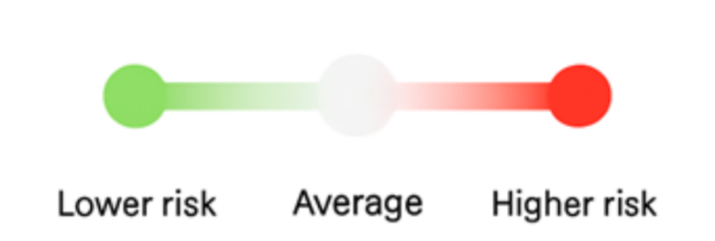
A risk multiplier represents an association between biomarker values and the 15-year incidence of a disease. The biomarker range associated with the lowest 15-year future incidence is assigned a risk multiplier of 1.0; a range with, for example, a 40% higher observed incidence has a risk multiplier value of 1.4. Risk multipliers are reported separately by sex and reflect relative future prevalence within age-matched peers.
Risk Multiplier Table Legend
What is the VOLO™ Modeled Range (VMR)?
Reference ranges typically provided with blood test results are population-based laboratory reference values. In contrast, the VOLO™ Modeled Range™ (VMR™) is the range of a single biomarker’s values associated with the lowest future incidence of the disease outcomes modeled within a health domain. Because there are multiple health domains, the VMRs reflect a weighted average across the major disease outcomes addressed in this guide. VMRs are derived from VH statistical models on a specific research dataset, are not medical recommendations, and may differ from the laboratory reference ranges that accompany clinical blood tests. VMRs should not be used to make medical decisions.
What makes VOLO Health different?
Many traditional models focus on an individual predictor and its relationship to a single outcome. For example, cholesterol is often evaluated primarily in relation to heart disease. Additionally, ranges commonly used in medical literature are typically based on clinical recommendations and/or population averages, rather than associations between biomarkers and multiple long-term health outcomes. [5]
In contrast, VOLO Health examines health predictors across multiple potential disease outcomes simultaneously. Our VMR values are based on real data associations between biomarker ranges and 15-year disease incidence across several key health domains. By evaluating each health predictor with an unbiased approach, we derive a fully data-driven, long-term perspective on health risk. This guide is designed to help you see patterns single-variable studies might miss, supporting a more proactive and holistic approach to healthcare.
Importantly, the VH Model is not intended to replace standard laboratory reference ranges, but rather to complement them. The model and accompanying insights are developed through large-scale population analyses. Individual interpretation should also consider additional factors such as demographic diversity, clinical history, and genetic predisposition.
This guide is intended to support clinicians and individuals in identifying patterns that may contribute to a more integrated understanding of health.
Predictive strength
Another way VOLO Health promotes health and wellness is through its insights related to the predictive strength values of biomarkers. This metric reflects how strongly each biomarker statistically is correlated with the modeled disease outcome in the UK Biobank research dataset. Predictive strength describes a relative correlation only; it does not establish the biomarker causes, prevents, or alters the disease outcome, and it does not predict any individual user’s future health. In the Most Predictive Biomarkers by Health Domain section of this guide, the biomarkers are colored with a gradient as illustrated in the graphic below. White represents lower correlation strength, while green represents higher correlation strength.
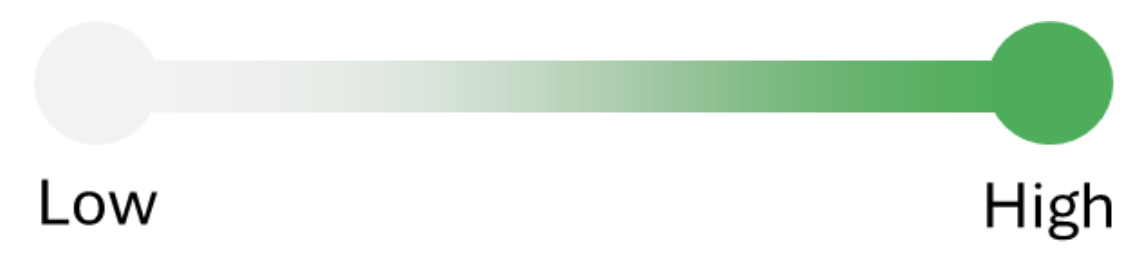
Additionally, you can find a list of biomarkers and their predictive strength values in the Biomarker Correlation Summary section. We scale predictive strength from zero (no predictive strength) to 10, the highest predictive strength. A value of 7 would have 70% of the predictive strength of a value of 10.
Some outcomes are defined by comparing specific biomarker levels to established thresholds. For example, type 2 diabetes is typically diagnosed if Hemoglobin A1C levels are at or above 6.5 percent.[6] In this case, a risk multiplier is no longer meaningful, given the likelihood someone who is diagnosed with type 2 diabetes is nearly 100 percent if their biomarker value passes that threshold. However, for the purpose of this guide, values are provided for such biomarkers regardless of these definitions, to maintain consistency and show data trends.
Disclaimer
The BRG and the VH modeled ranges are provided solely for informational, educational, and general-wellness purposes. The BRG is not intended to diagnose, cure, mitigate, treat, or prevent any disease or other condition, and it does not provide medical advice, individualized risk predictions, or treatment recommendations. Likewise, the BRG does not claim that any biomarker, behavior, or intervention will cure, mitigate, treat, or prevent any condition in any individual. The modeled ranges in the BRG are not clinical or laboratory reference ranges, diagnostic thresholds, or treatment recommendations. The BRG does not account for all factors relevant to health and cannot rule in or rule out the presence or absence of any disease or other medical condition.
The information provided in the BRG is derived from applying data science, such as statistical modeling and machine learning, to population datasets with known and potential limitations regarding population demographics—including geographic location, socioeconomic status, clinical setting, data collection methodology, age, gender, race, ethnic background, and potential bias in the underlying population. These limitations may affect the accuracy and generalizability of outputs across different populations or use contexts. The statistical associations described in this guide are not evidence of causation. VH’s research has not concluded that any biomarker causes, prevents, treats, mitigates, or cures any disease or condition. Any and all claims regarding the accuracy of the information, the benefits of using such information, or the predictive value of the underlying models for any individual are expressly disclaimed.
The information provided here does not consider an individual’s health conditions, medical history, or specific circumstances. This guide is not a substitute for consultation with a qualified healthcare professional or for screening or diagnostic testing. Individuals should seek advice from a qualified healthcare professional for any questions regarding diagnosis, treatment, or prevention of any disease or other medical condition. Individuals or entities using the information in this guide do so at their own risk.
[1] Califf RM. Biomarker definitions and their applications. Exp Biol Med. 2018;243(3):213-221. doi:10.1177/1535370217750088
[2] Ferguson MA, Waikar SS. Established and Emerging Markers of Kidney Function. Clin Chem. 2012;58(4):680-689. doi:10.1373/clinchem.2011.167494
[3] Patibandla S, Gupta K, Alsayouri K. Cardiac Biomarkers. In: StatPearls. StatPearls Publishing; 2026. Accessed June 23, 2026. http://www.ncbi.nlm.nih.gov/books/NBK545216/
[4] Kristensen M, Iversen AKS, Gerds TA, et al. Routine blood tests are associated with short term mortality and can improve emergency department triage: a cohort study of >12,000 patients. Scand J Trauma Resusc Emerg Med. 2017;25:115. doi:10.1186/s13049-017-0458-x
[5] Ozarda Y. Reference intervals: current status, recent developments and future considerations. Biochem Medica. 2016;26(1):5-11. doi:10.11613/BM.2016.001
[6] Chatterjee S, Khunti K, Davies MJ. Type 2 diabetes. The Lancet. 2017;389(10085):2239-2251. doi:10.1016/S0140-6736(17)30058-2
© 2026 Volo Health, LLC. All rights reserved. VOLO™ is a trademark of Volo Health, LLC. All other trademarks, service marks, trade names, and logos are the property of their respective owners.