Kidney Health
For kidney health, we model and predict the 15-year probability of acute renal disease, a condition which affects around 13.3 million people globally per year.[7] We recognize kidney health as a cornerstone domain, operating as a key indicator and potential predictor of declining health across body systems. In 2023, the American Heart Association characterized “cardiovascular-kidney-metabolic syndrome” or CKM, a disorder encompassing heart disease, kidney disease, diabetes, and obesity. This new development expands on cardiorenal syndrome, which captures the interconnected relationship between diseases of the heart and kidneys, to include metabolic dysfunction, accentuating the importance of interdisciplinary, multidomain care for chronic disease prevention and management.[8] Kidney functions include filtering blood, eliminating waste, regulating fluids and electrolytes, controlling blood pressure, supporting red blood cell production, and metabolizing vitamin D.[9]
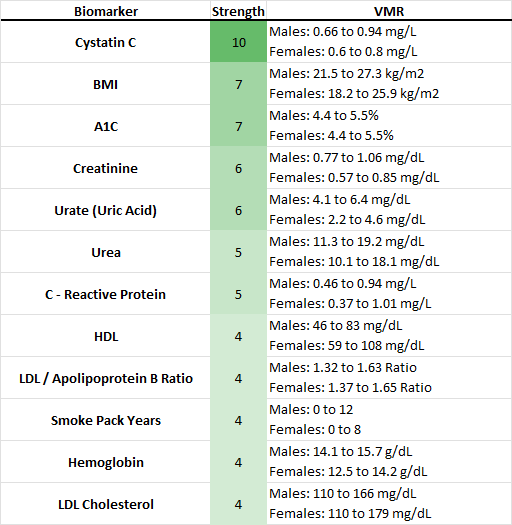
Below are values for our model’s most predictive biomarkers for predicting adverse kidney health outcomes in males and females aged 55 to 70.
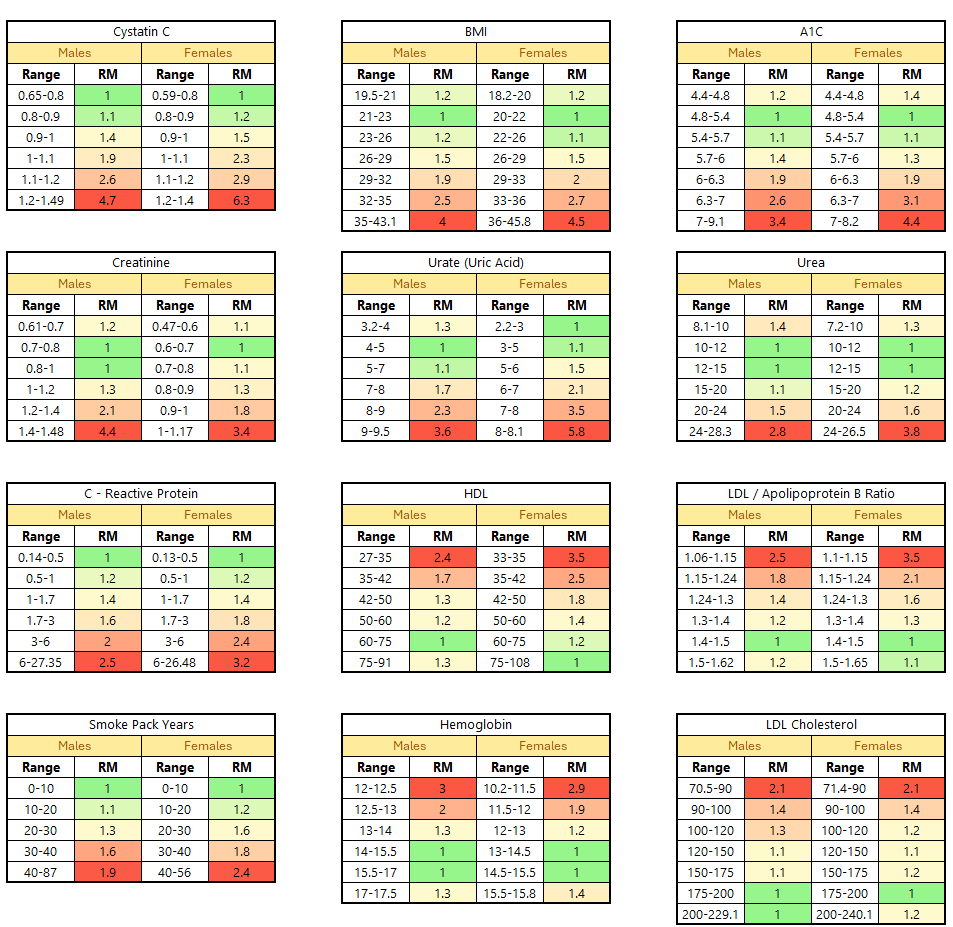
The tables below contain kidney health risk multipliers (RM) for each of the above biomarkers.
[7]A single number for advocacy and communication—worldwide more than 850 million individuals have kidney diseases - Kidney International. Accessed May 12, 2026. https://www.kidney-international.org/article/S0085-2538(19)30786-0/fulltext
[8]Ndumele CE, Rangaswami J, Chow SL, et al. Cardiovascular-Kidney-Metabolic Health: A Presidential Advisory From the American Heart Association. Circulation. 2023;148(20):1606-1635. doi:10.1161/CIR.0000000000001184
[9]Ogobuiro I, Tuma F. Physiology, Renal. In: StatPearls. StatPearls Publishing; 2026. Accessed July 15, 2026. http://www.ncbi.nlm.nih.gov/books/NBK538339/
© 2026 Volo Health, LLC. All rights reserved. VOLO™ is a trademark of Volo Health, LLC. All other trademarks, service marks, trade names, and logos are the property of their respective owners.