Longevity
For longevity, we model and predict the 15-year probability of all-cause mortality at age 85 years (projected from 70 year old), defined as non-accidental deaths from any cause. This outcome includes, but is not limited to, death associated with age-related diseases discussed throughout this guide. Longevity and healthy aging reflect a multifactorial process, shaped by the relationships between genetic predisposition, environmental exposures, and individual behaviors over time.[15] A longevity-focused framework emphasizes early identification of risk, ongoing monitoring, and a granular, personalized approach to health that accounts for individual variation across disease endpoints.
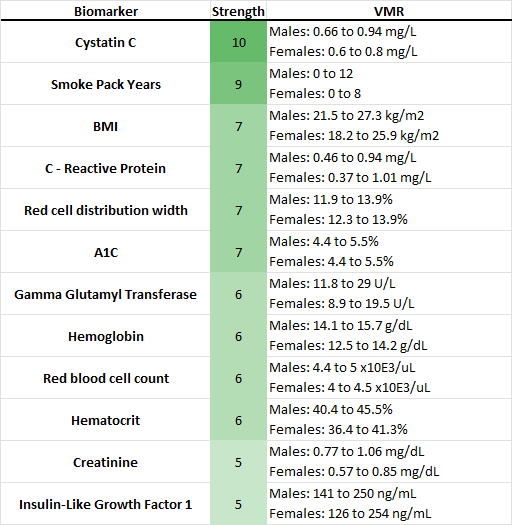
Below are values for our model’s most predictive biomarkers for experiencing death in males and females aged 40 to 70.
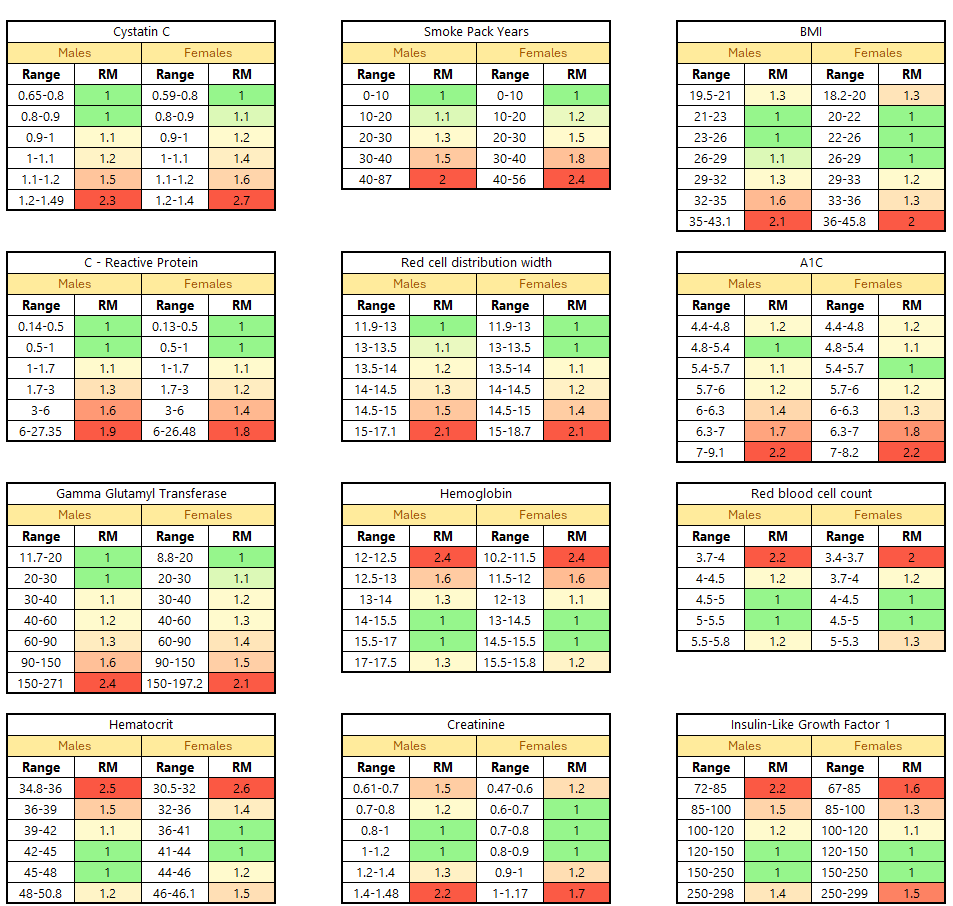
The tables below contain longevity risk multipliers (RM) for each of the included biomarkers.
[15]Martinović A, Mantovani M, Trpchevska N, et al. Climbing the longevity pyramid: overview of evidence-driven healthcare prevention strategies for human longevity. Front Aging. 2024;5:1495029. doi:10.3389/fragi.2024.1495029
© 2026 Volo Health, LLC. All rights reserved. VOLO™ is a trademark of Volo Health, LLC. All other trademarks, service marks, trade names, and logos are the property of their respective owners.