Early Findings
Frequently monitored biomarkers are not top predictors for cardiovascular health in our analysis but remain important.
These three common biomarkers are routinely monitored by physicians. However, they did not emerge from our models as top predictors for cardiovascular health for either males or females.
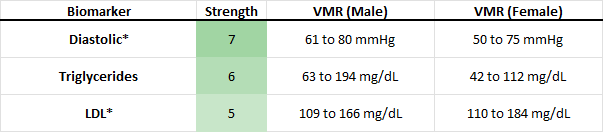
*Individuals are removed from our analysis if they report taking medications intended to directly modify the biomarker, including statins for cholesterol, or anti-hypertensives for blood pressure.
For comparison, below are the most predictive biomarkers in our model inputs for cardiovascular health:
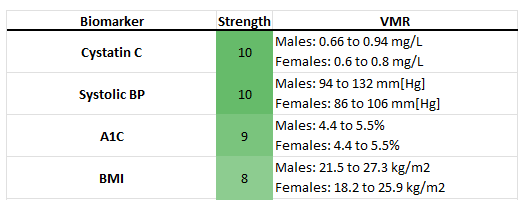
Cystatin C is one of the most predictive markers for multiple health domains.
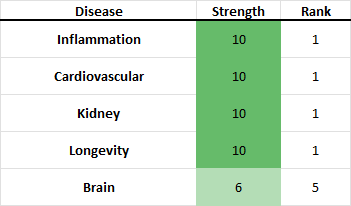
Cystatin C is a blood-based protein marker used to assess kidney function, though it is not routinely monitored in standard clinical practice.[106][107][108] However, our models identified Cystatin C as one of the top predictive biomarkers across every health outcome analyzed.
Below are the six health domains in which Cystatin C was among the strongest predictors, ordered by strength of association. The “Rank” column indicates how Cystatin C compared with the other top biomarkers evaluated for each outcome.
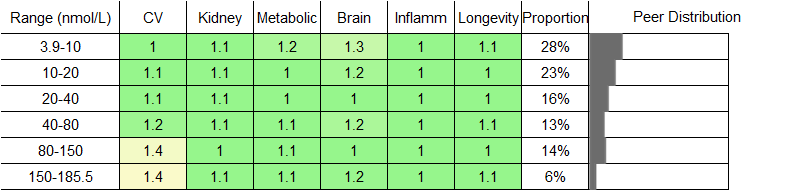
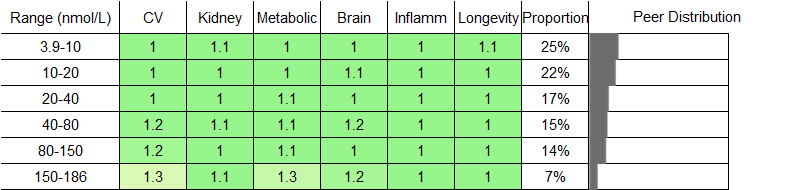
Lipoprotein(a) is not predictive of any major diseases on our list.
In our models, Lipoprotein(a) did not emerge as a top predictor for the specific disease outcomes modeled in this guide, and prevalence multipliers remained close to 1.0 across most health domains and biomarker levels. This reflects the predictive performance of our statistical models on the UK Biobank research dataset for the specific endpoints modeled, and should not be interpreted as a statement that Lp(a) is clinically unimportant or that elevated Lp(a) does not contribute to cardiovascular risk. The American Heart Association has identified Lp(a) as a genetically determined, causal, and prevalent risk factor for atherosclerotic cardiovascular disease, and individuals with elevated Lp(a) should discuss its clinical significance with their physician.[33]
Only the cardiovascular health domain, which encompasses MACE3, showed an association with the highest values of Lipoprotein(a), but the association was still modest in comparison with the associations of other biomarkers.


Quitting smoking is associated with substantial improvements in modeled risk markers.
Smoking has been associated with adverse effects on nearly every organ system in the body, particularly the cardiovascular and respiratory systems. Tobacco use has been associated with impaired heart and lung function, chronic inflammation, vascular damage, and increased incidence of multiple chronic diseases. Published guidance from organizations such as the American Lung Association and American Cancer Society indicates that, in observational studies, individuals who stop using tobacco show progressive reductions in incidence of certain tobacco-related conditions over time.[109][110]
Our findings are directionally consistent with published literature, including the American Cancer Society’s How to Quit Using Tobacco report.[111] In the UK Biobank research dataset, we observed reductions in modeled cardiovascular and lung outcome prevalence multipliers among individuals who reported quitting, compared to individuals who continued to smoke, after two years from reported quit date and after controlling for baseline pack-year history. These are observational associations within the dataset and do not establish that quitting will produce a specified risk reduction for any individual.
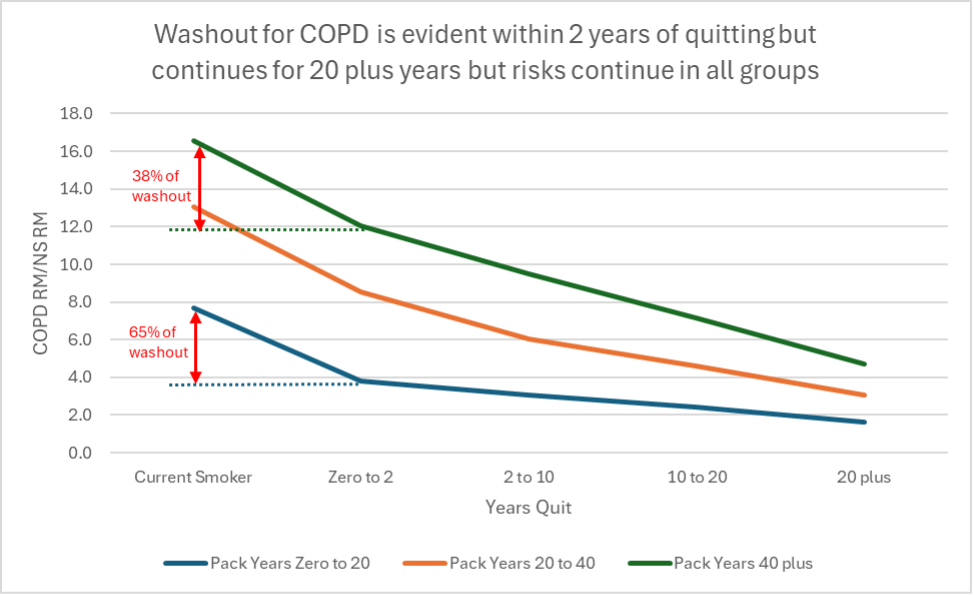
In the dataset, individuals who reported having quit smoking demonstrated improvements in modeled COPD and lung cancer prevalence multipliers. Within the first two years after quit date, prevalence multipliers in the cohort decreased by approximately 23% to 51% across pack year groups, with reductions of up to approximately 83% in the prevalence multiplier at twenty or more years after quitting. For comparison, modeled prevalence multipliers for individuals who reported never smoking were 0.27 for lung cancer and 0.38 for COPD. These figures describe observed group-level associations in the UK Biobank research dataset and are not predictions of any individual user’s outcome.
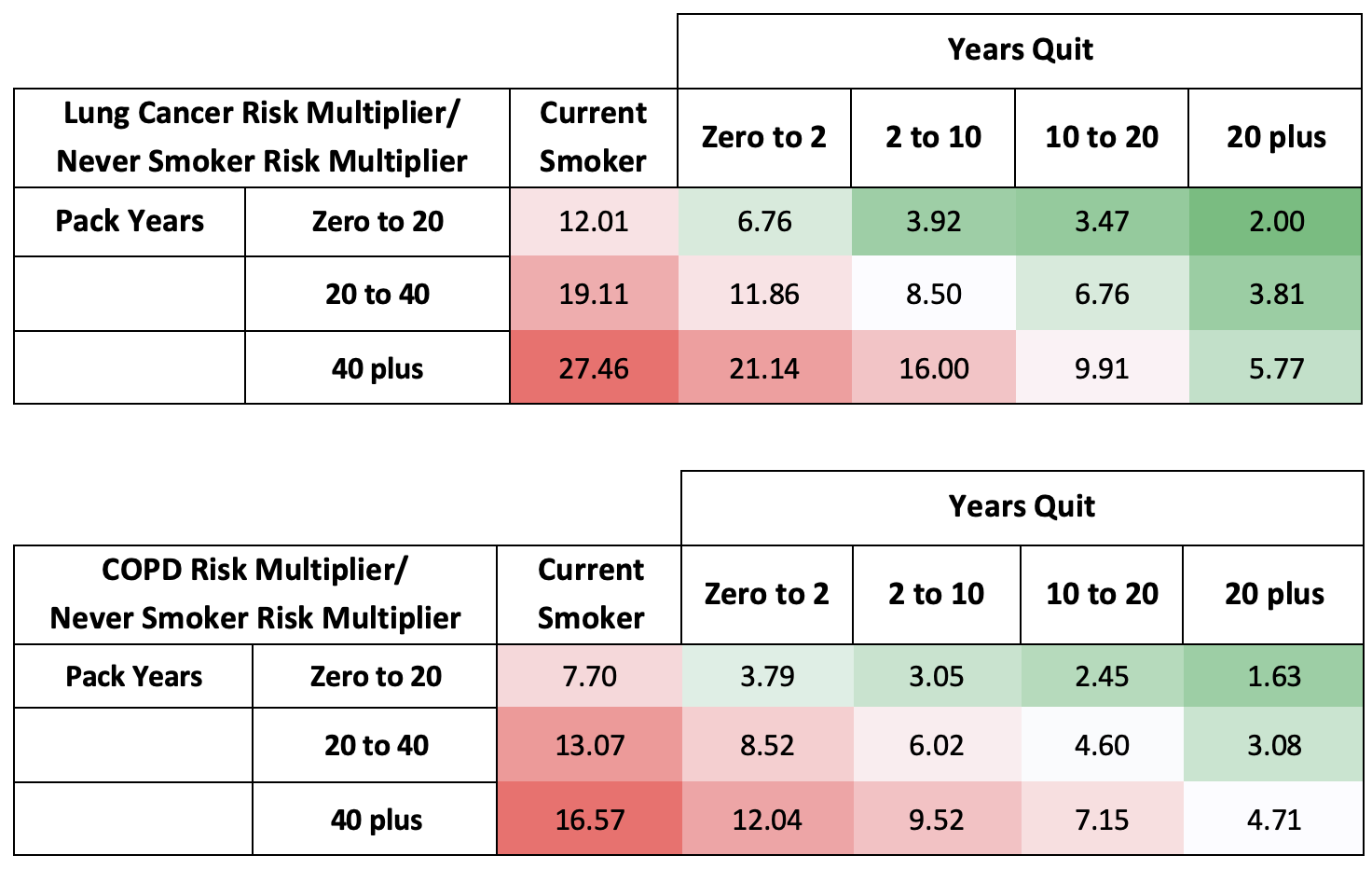
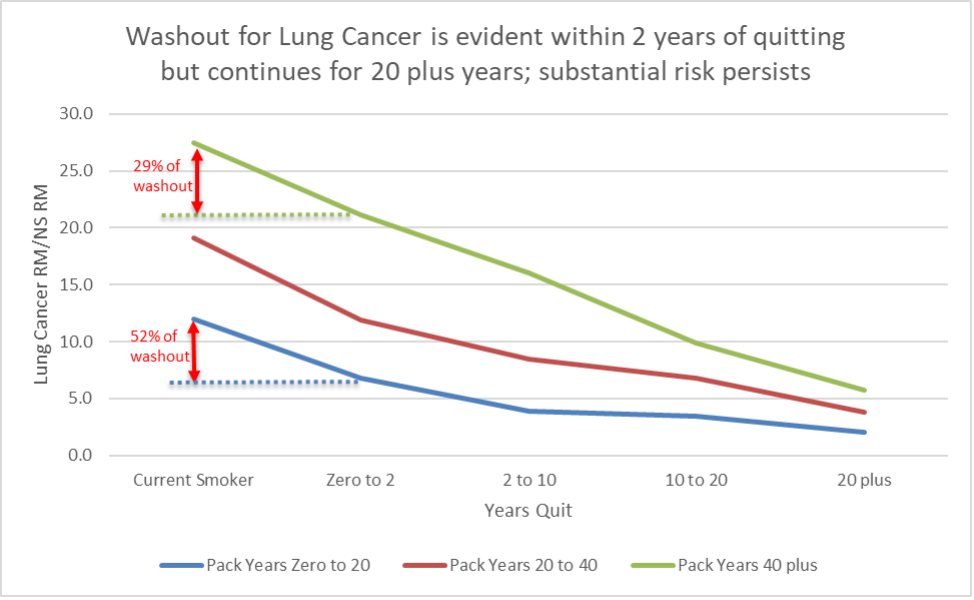
When comparing individuals who reported quitting smoking to individuals who reported never smoking, the dataset showed a relatively rapid early reduction in modeled prevalence multipliers during the first two years for lighter smoking-history categories. This describes patterns observed in the research dataset and is not a clinical prediction or treatment claim.
[33]Borén J, Chapman MJ, Krauss RM, et al. Low-density lipoproteins cause atherosclerotic cardiovascular disease: pathophysiological, genetic, and therapeutic insights: a consensus statement from the European Atherosclerosis Society Consensus Panel. Eur Heart J. 2020;41(24):2313-2330. doi:10.1093/eurheartj/ehz962
[106] Blood Tests: Types, Results & How They Work. Accessed May 12, 2026. https://my.clevelandclinic.org/health/diagnostics/24508-blood-tests
[107] Clinician perspectives on inpatient cystatin C utilization: A qualitative case study at Mayo Clinic - PMC. Accessed July 30, 2025. https://pmc.ncbi.nlm.nih.gov/articles/PMC7732069/
[108]Shlipak MG, Mattes MD, Peralta CA. Update on Cystatin C: Incorporation Into Clinical Practice. Am J Kidney Dis. 2013;62(3):595-603. doi:10.1053/j.ajkd.2013.03.027
[109] Benefits of Quitting | American Lung Association. Accessed May 13, 2026. https://www.lung.org/quit-smoking/i-want-to-quit/benefits-of-quitting
[110] Pezzuto A, Ricci A, D’Ascanio M, et al. Short-Term Benefits of Smoking Cessation Improve Respiratory Function and Metabolism in Smokers. Int J Chron Obstruct Pulmon Dis. 2023;18:2861-2865. doi:10.2147/COPD.S423148
[111]American Cancer Society. Quit Tobacco | How To Quit Smoking or Smokeless Tobacco. Accessed November 12, 2025. https://www.cancer.org/cancer/risk-prevention/tobacco/guide-quitting-smoking.html
© 2026 Volo Health, LLC. All rights reserved. VOLO™ is a trademark of Volo Health, LLC. All other trademarks, service marks, trade names, and logos are the property of their respective owners.